An assistant that can find the answer
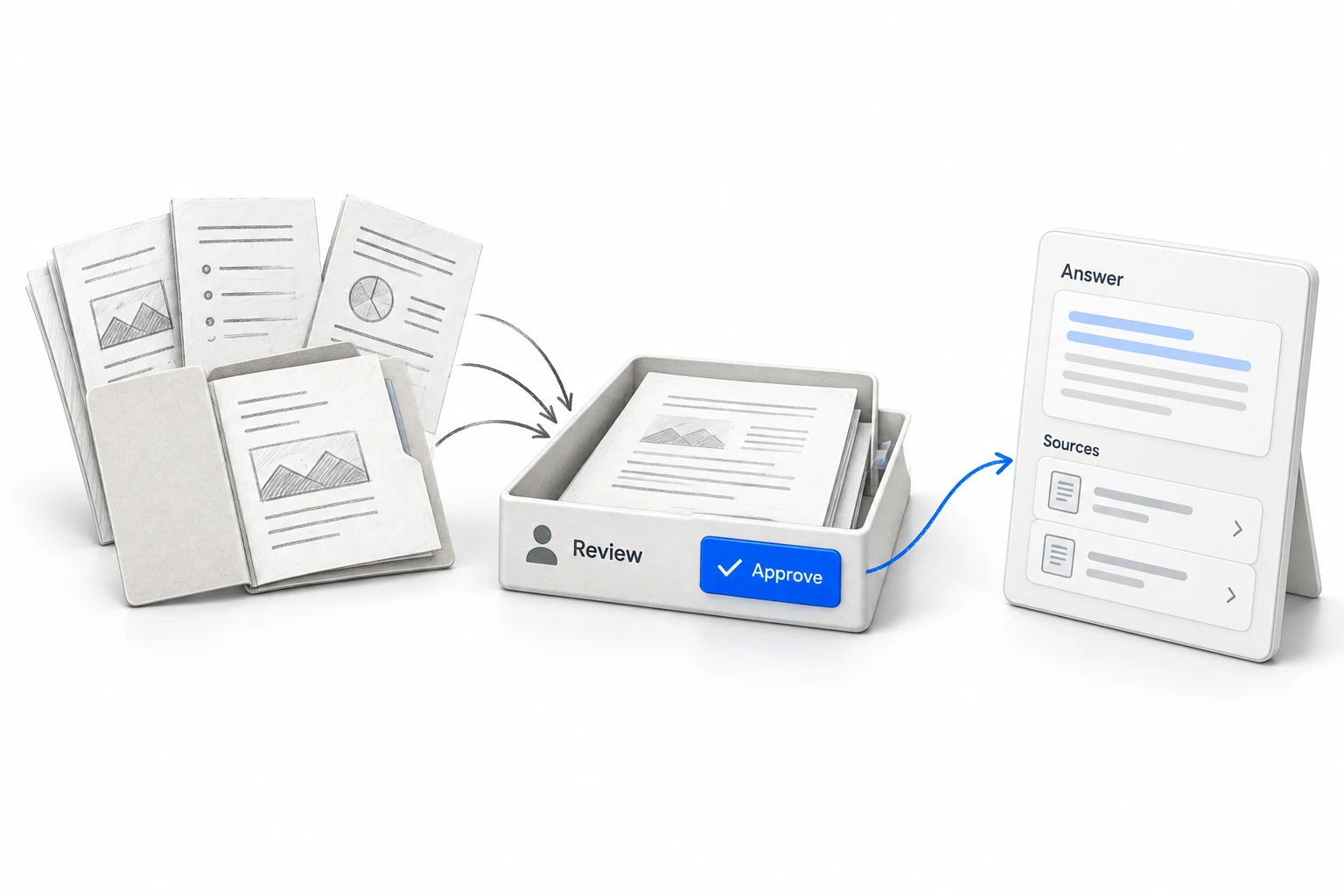
Bring approved documents into a searchable knowledge assistant, with source references and a clear response when the information is missing.
AI agents & automation
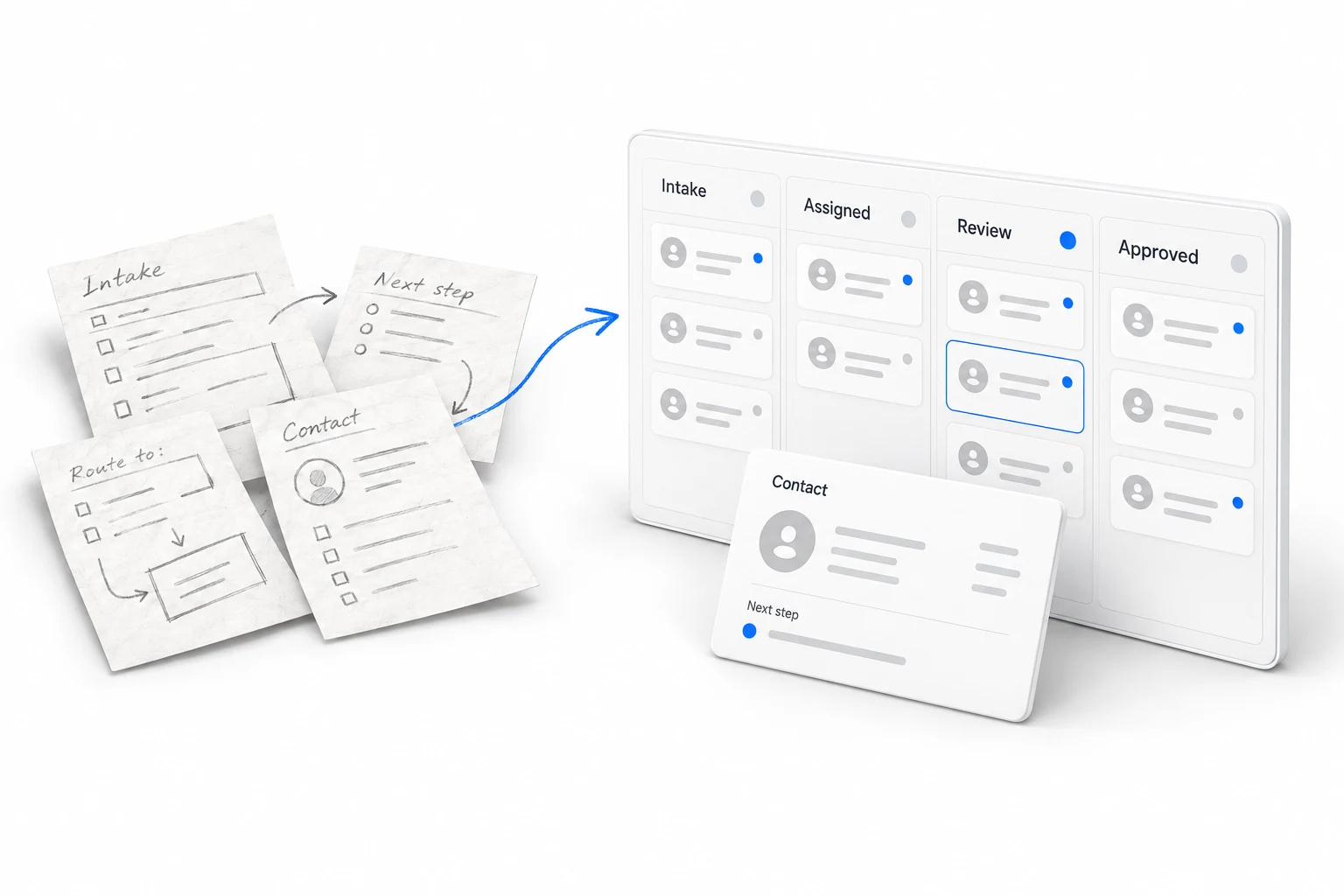
The same question comes up again. Someone searches the same folders, copies the same information, and starts the same task. I build AI assistants and connected workflows around those moments, with clear limits and a person who can step in.
Work with me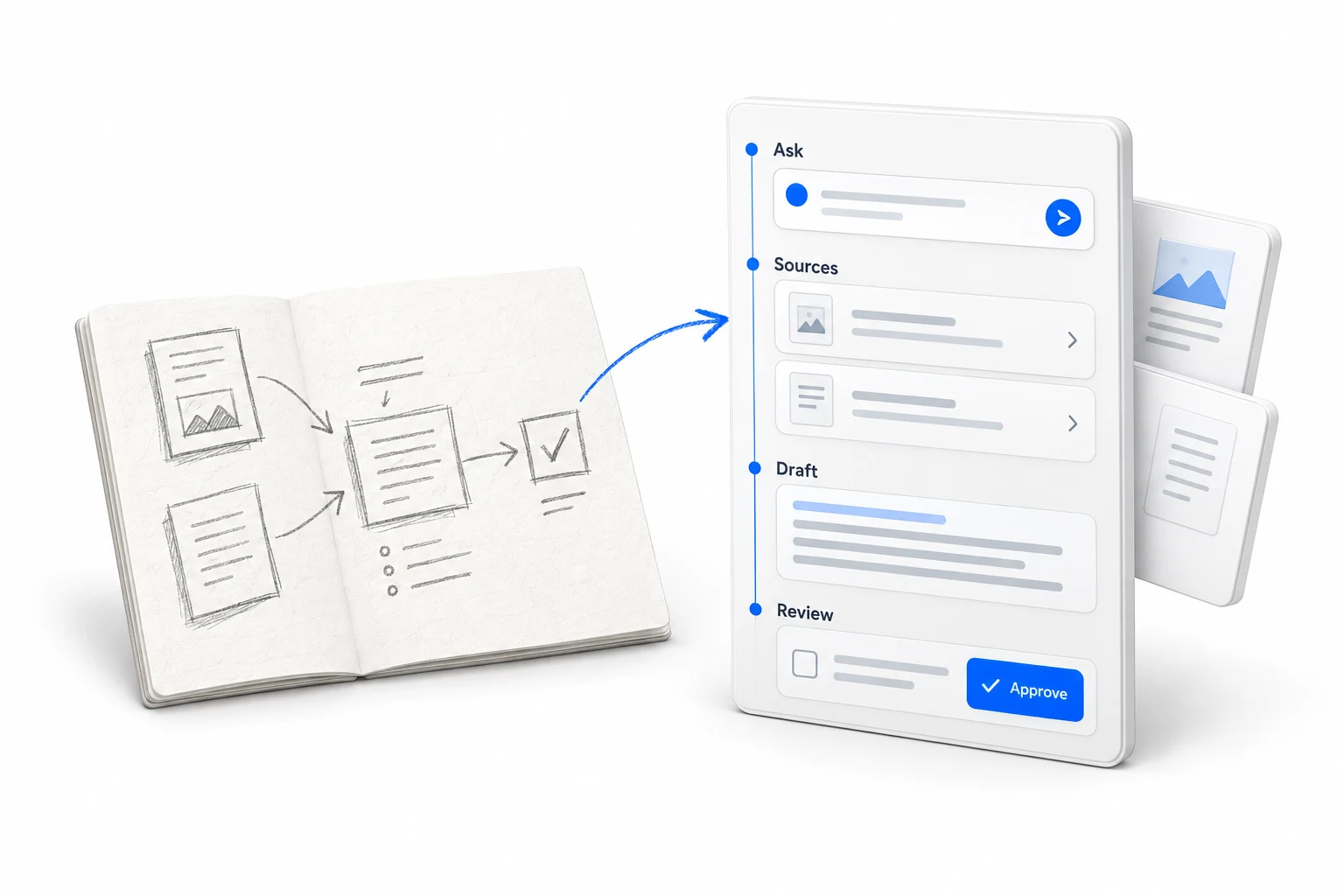 Sketch the idea. Build the useful thing.
What we can make
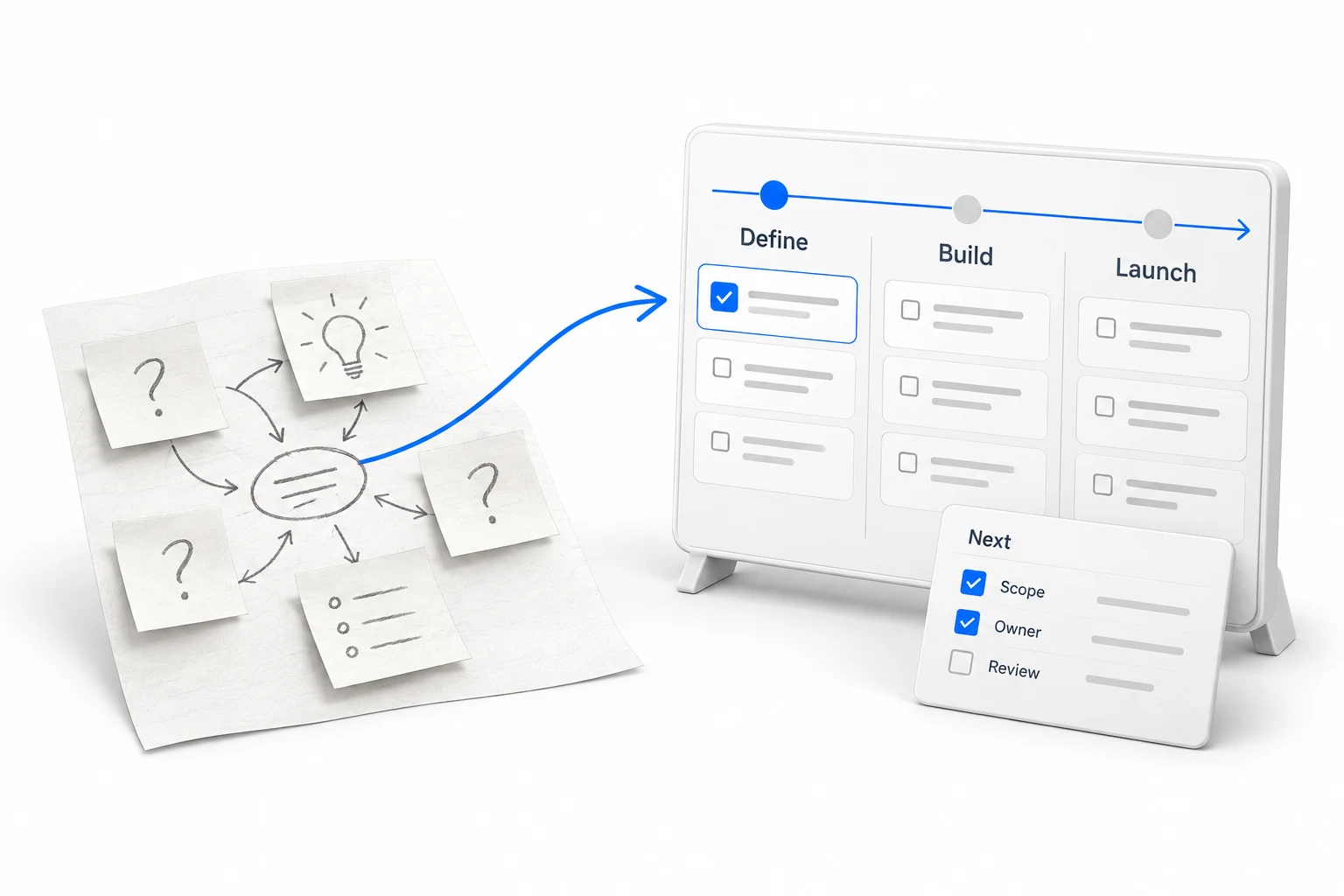
A useful agent needs a defined job, reliable information, and permission to do that job. We look at the current workflow before choosing a model or connecting a tool. Sometimes a straightforward automation is enough. Sometimes the task needs an assistant that can work with language and context.
Bring approved documents into a searchable knowledge assistant, with source references and a clear response when the information is missing.
Connect an intake, research step, draft, or system update. Decide which actions can run automatically and which need approval.
Use representative examples, failure cases, and review criteria to evaluate the output before putting the workflow into everyday use.
How I approach it
An initial discovery scope can produce a map of the task, a review of the available information, and a pilot plan with clear acceptance criteria. For an implementation, we agree on the inputs, connected tools, review steps, and exceptions before I build a focused version. That gives your team something to evaluate against its own work, with a clear decision about what is ready and what needs attention.
Knowledge-assistant discovery and solution designBefore we begin
Bring an example of the task and the person who knows it best. We can use that conversation to decide whether discovery, a pilot, or a defined implementation is the right starting point.
We assess existing software, subscriptions, and integrations before adding anything. A built-in feature or a straightforward automation may be enough. An AI assistant earns its place when working with language or context helps someone complete the task.
Useful starting material includes sample requests, approved source documents, and examples of a good answer. Redacted examples can support discovery. During a build, access is limited to the records and actions the workflow needs, with approval before consequential actions.
We agree on representative tasks and compare the output with the current process. Checks can cover answer quality, source references, review effort, operating cost, and missing or conflicting information. A polished demo alone does not establish that the system is ready for daily use.
Before launch, the scope identifies who owns the accounts, updates source material, reviews failures, and approves changes. Documentation, training, and any ongoing support are agreed explicitly. Model and software costs belong in that discussion too.
Connected work