An intake people can act on
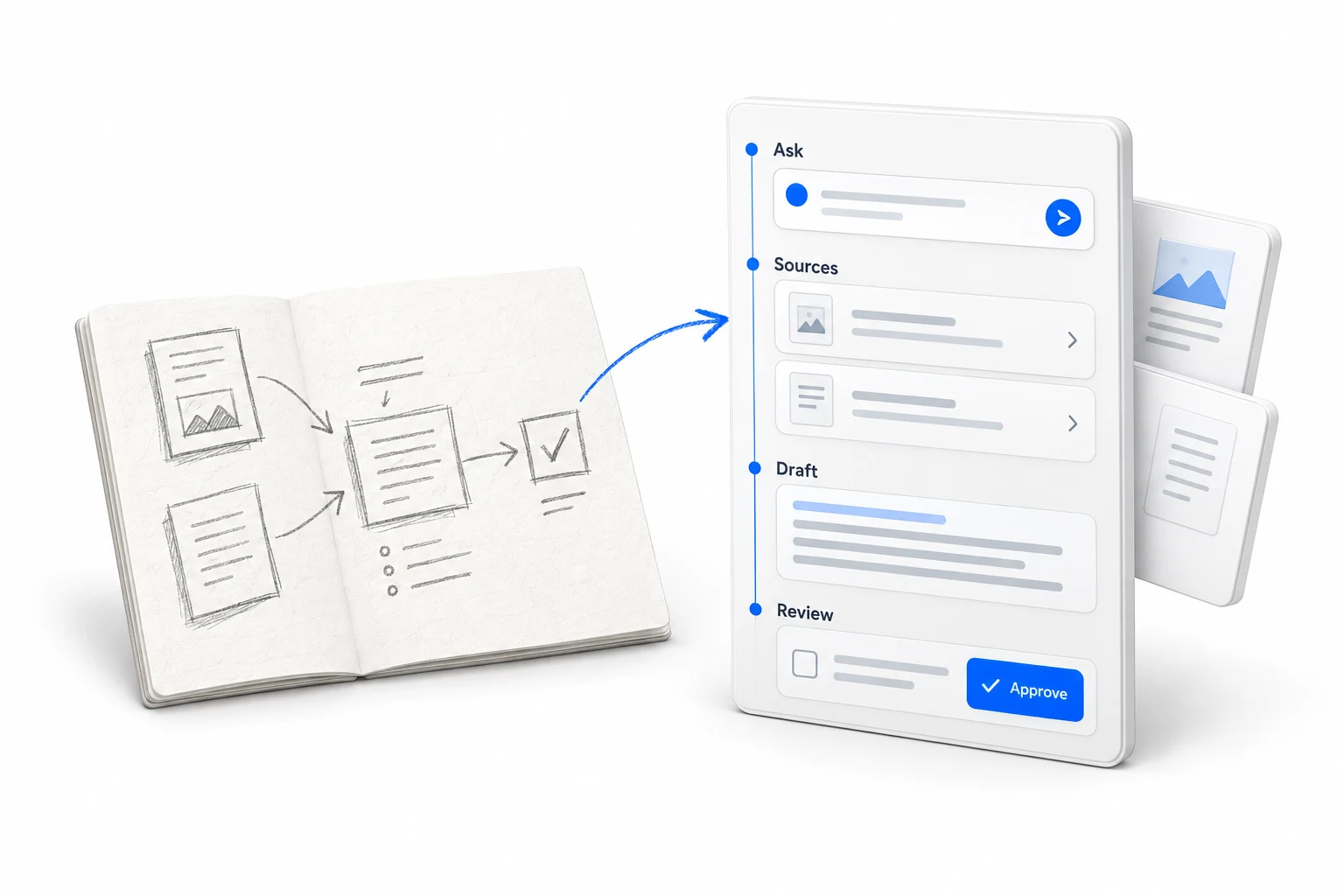
Capture the information needed to start, route requests to the right owner, and make priorities and missing details visible.
Operations, workflows & CRM
Customer details in one place. Project updates in another. A team spending too much time piecing them together. I build connected business systems that make records, priorities, and responsibilities easier to manage.
Work with me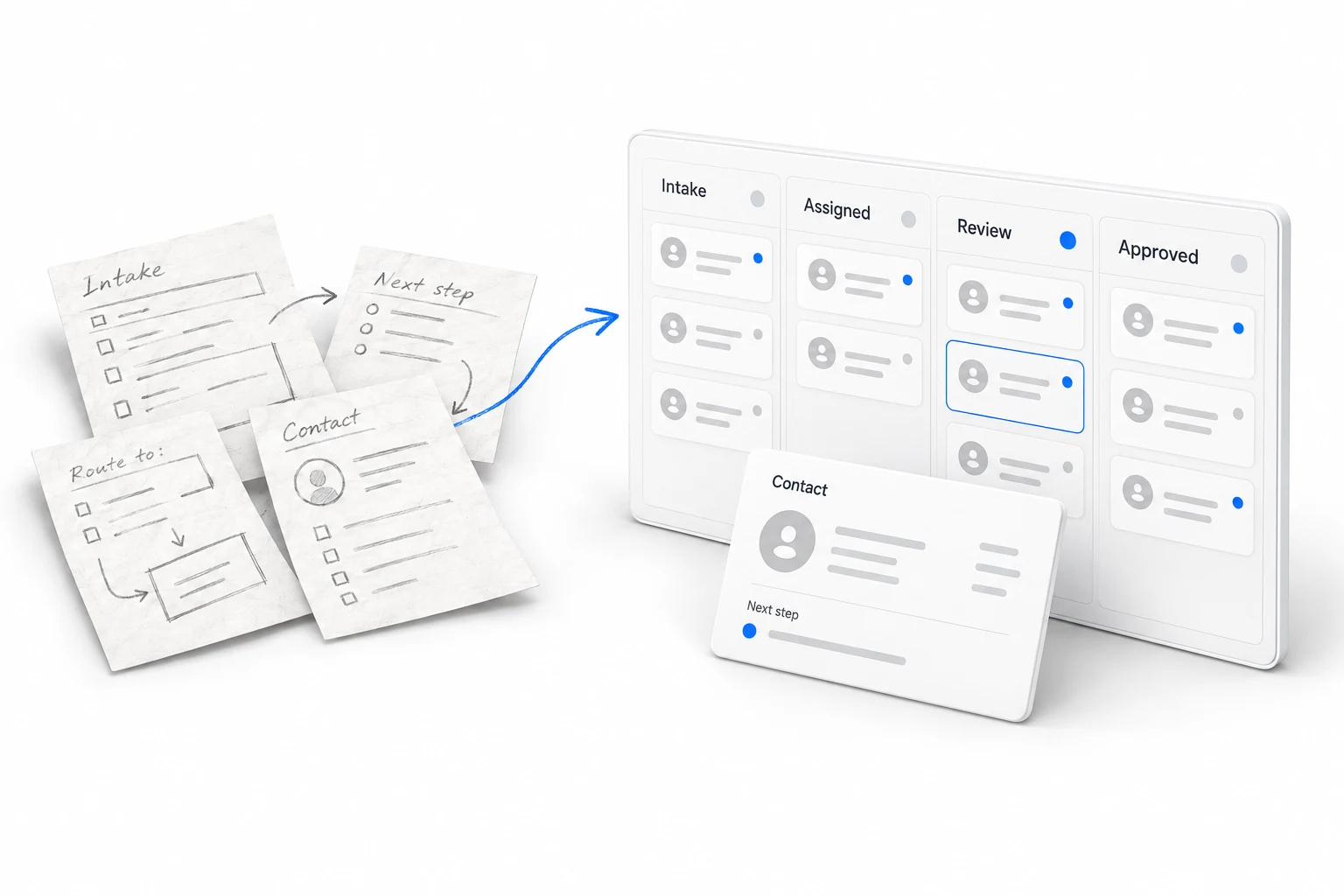 Sketch the idea. Build the useful thing.
What we can make
A process is more than a diagram. It needs records people can trust, statuses that mean something, and an owner for the next action. We map how work actually moves, including the exceptions, before configuring the system around it.
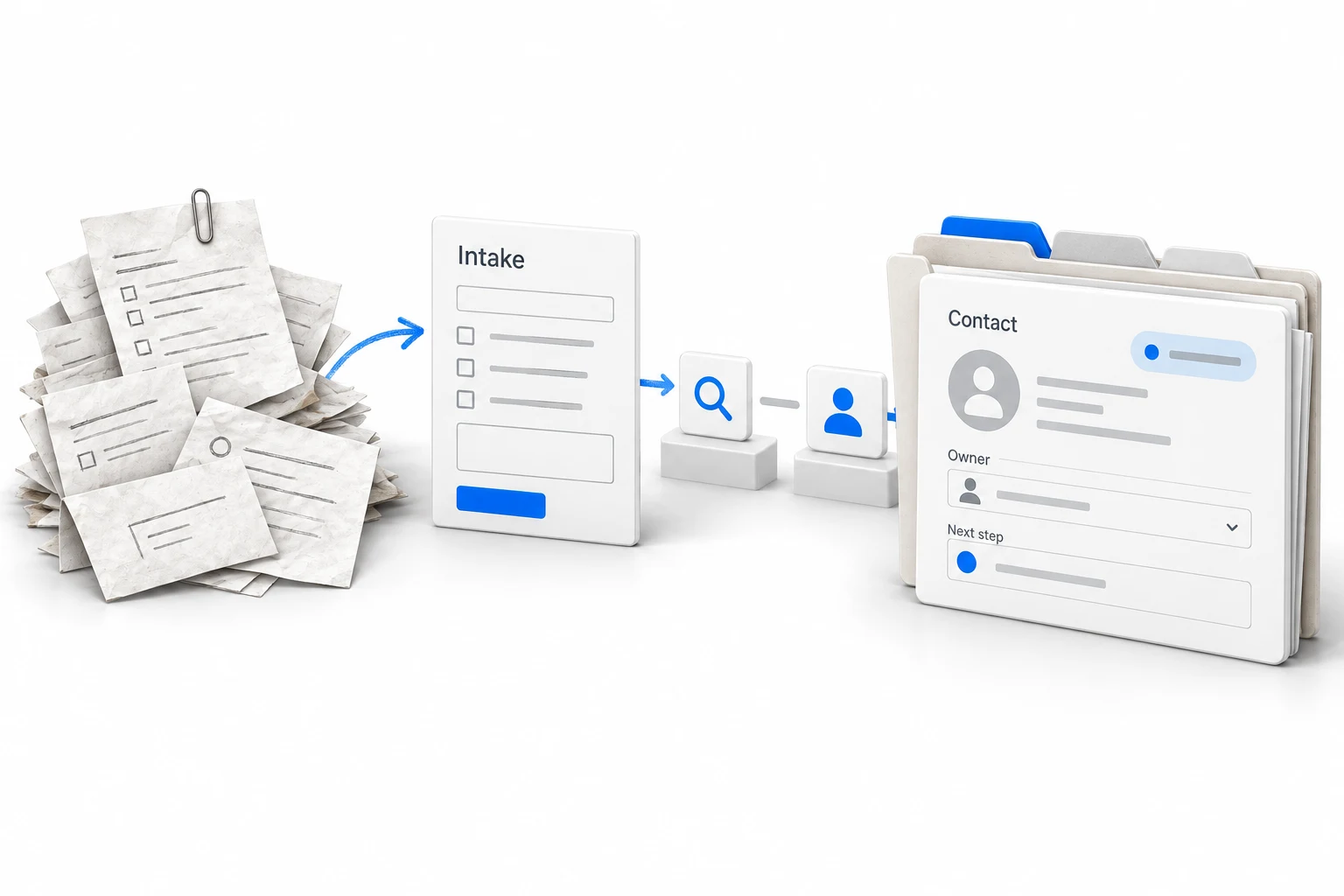
Capture the information needed to start, route requests to the right owner, and make priorities and missing details visible.
Connect customer, project, and operational records around the work, with useful relationships, status definitions, and a clear source for each piece of information.
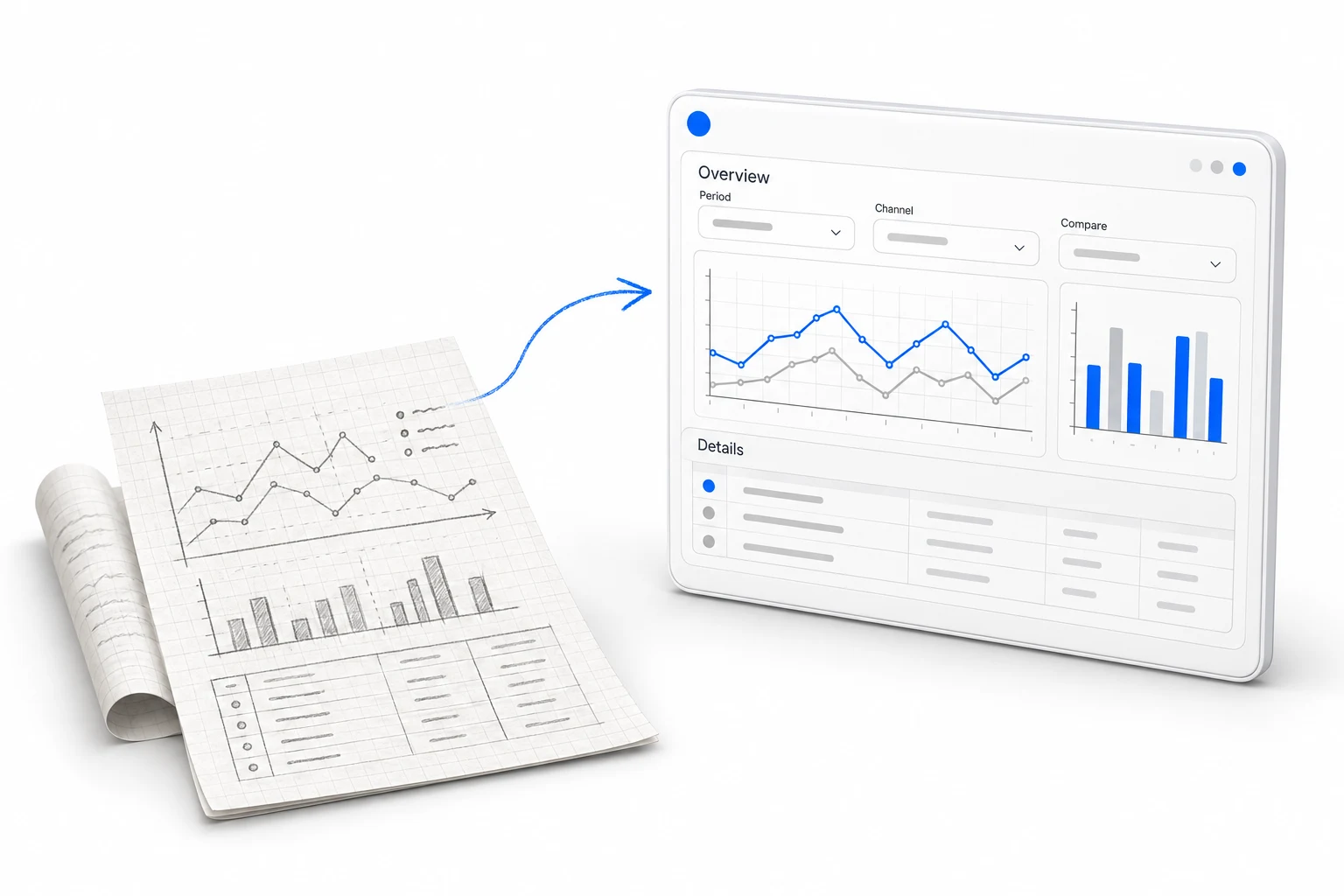
Define approvals, reminders, and responsibilities so a task can move forward without relying on one person to remember every follow-up.
How I approach it
We trace a representative request through the people and systems involved. An initial review can produce a process map, shared definitions for records and statuses, and a scoped plan for what should change. Implementation turns that plan into the agreed records, views, connections, and documentation. My background spans campaign operations, reporting, work across teams, Smartsheet systems, and CRM work.
Operational systems and reporting at RazorfishBefore we begin
A system has to make sense to the people updating it as well as the people reading the reports. We plan the change around both, including the awkward cases that a tidy process diagram can miss.
We assess where the current tools help and where records or progress get lost. Better configuration may solve the problem. A connection between tools or a custom internal system makes sense when the existing setup cannot support the agreed workflow.
Bring a recent request, the forms or spreadsheets it passed through, and the report someone used to check its progress. Redacted examples are enough to begin. We identify the people responsible for the records and agree on access before making changes.
We test a complete task with the people who do it, including missing information, duplicate records, reassignment, and approvals. The review checks whether the next action is clear and reporting agrees with the source records. Success criteria are agreed before the build.
The scope defines what data moves, how it will be checked, and how the team will learn the new workflow. We agree who manages accounts, updates the process, and handles exceptions. Documentation and any ongoing support have explicit responsibilities.
Connected work