A home for what’s next.
The website is live. The work continues.
Why I built DanLoris.com, what you will find here, and how I turn ideas into things people can use.

TLDR
The short versionDanLoris.com brings my portfolio, services, and writing into one place. The work connects strategy, design, AI, and operations.
The Journal will share practical methods you can use, starting with a clearer way to frame a project: who it helps, what they need to accomplish, and what they should be able to do next.
An idea can sit in a notebook for a long time. A website gives it somewhere to go.
I built DanLoris.com to bring my work, experience, and thinking into one place. You can see what I make, understand how I approach a problem, and take something useful back to your own work. That last part matters. A personal website should earn the time someone spends on it.
A clearer picture of the work
My work crosses websites, digital products, brand, AI, and operations. Those disciplines often meet inside the same project. A new product needs a clear story. A good website needs a useful path for the person visiting it. An automation needs a process worth repeating.
Keeping those pieces together is central to how I work. I want to understand the business need, make the experience clear, and help turn the idea into something people can actually use. The site gives that approach a more concrete home than a list of job titles can.
The portfolio includes product and venture experience from Skipify.ai, operational work at Razorfish, and design and consulting work through Plego. Each case explains my contribution and the stage of the work. Discovery, interface design, and an implemented build are different things. You should be able to tell which one you are looking at.
Why the sketches are here
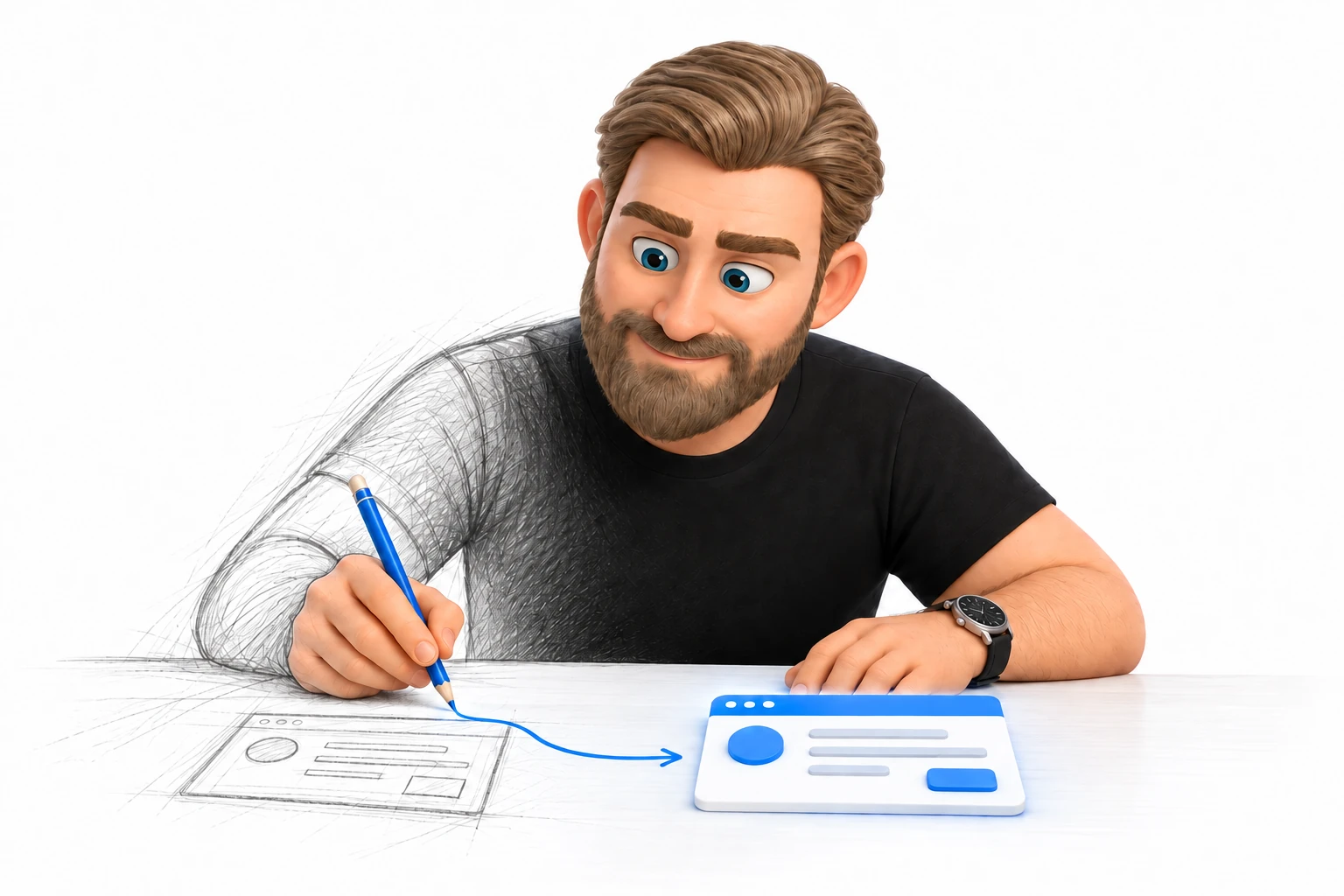
The visual direction follows the work itself. A rough thought becomes a sketch. The sketch becomes a clearer structure. That structure becomes a website, a tool, or a process someone can use.
The illustrated version of me belongs in that process. You will see him working through ideas, drawing connections, and shaping the finished thing. The blue handwritten details keep a little of that unfinished thinking visible. They are a reminder that useful work starts before the polished presentation.
That is also why I care about showing the reasoning behind a project. A finished screen can look good without explaining what it solved. A case study should give you enough context to understand the decisions, the constraints, and my role in making it happen.
Building What’s Next starts with a useful problem in front of us.
What The Journal will give you
The Journal is where I will share methods, observations, and decisions from this kind of work. Expect practical writing about AI workflows, product design, websites, and the systems that help teams operate.
I want each article to leave you with something you can try or a question you can frame more clearly. That might be a way to choose a first AI project, a better approach to an intake form, or a reporting decision that makes a dashboard easier to act on. There is plenty of technology to keep up with. I am more interested in helping people decide what is worth doing with it.
AI is part of that perspective. It can help move an idea forward, explore alternatives, and reduce repetitive work. The useful questions are still specific. Who needs this? What should happen next? How will we know whether it helped?
Start with the part that matters to you
If you have a project in mind, browse the work. The cases connect the visible output with the process and skills behind it. If you want to understand what I can help with, explore the services. There is one straightforward invitation to work together, so you do not need to decide which kind of engagement you fit before starting a conversation.
If you are here to learn, start with The Journal. The What’s Next? newsletter is another way to follow the ideas as they develop. I will keep adding useful material and refining the site around the people using it.
For your own next project, try this small exercise. Write down who it helps, what they need to accomplish, and what they should be able to do after using it. Keep those three sentences beside the sketch. They will give you a better starting point than a long feature list.
This site is a place to put that thinking to work. Welcome in.
Written by Dan Loris
I design and build websites, digital products, AI tools, and systems people can use. The Journal shares the thinking behind the work.
For help with this work, explore Digital products & internal tools.
Work through your own example with The Idea-to-Build Brief.
Work with meKeep thinking.
The Journal →
Write a website brief people can build from.
A practical website brief connects the visitor's task, the business goal, the evidence, and the first release.
Read the article →
A prototype should answer a question.
Choose the uncertainty that matters, build enough to test it, and use what you observe to decide what deserves your next investment.
Read the article →
Choose the right job for an AI agent.
Decide where fixed rules are enough, where AI interpretation helps, and where an agent needs room to choose its next step.
Read the article →